EMPLOYER AND CONSUMER COSTS
In 2026, Maine businesses in the small group market saw their healthcare costs rise by an average of 17.5%—more than twice the rate of the consumer price index. For some businesses, premium growth was well into the double digits, with some employers reporting cost increases as high as 40%. Unfortunately, this degree of year-over-year cost inflation has become commonplace, and there is no evidence to suggest that it will moderate going forward. Instead, absent any significant changes in the market, employers and consumers can expect healthcare costs to continue rising and eating into a greater and greater share of their budgets.
For employees and their families, rising healthcare costs have translated into higher insurance premium contributions, higher—and expanded use of—deductibles, higher copays and coinsurance, and higher out-of-pocket maximums. These rising out-of-pocket costs not only make it more difficult for individuals to afford care when needed, but they eat into other parts of family budgets like food, housing, clothing, and utilities—things that are essential to maintaining physical and emotional health.
For employers, who in most cases have absorbed more of the cost increase than they have passed along to their employees, rising healthcare costs have impacted their ability to grow and compete in the market. More dollars directed to health care mean fewer dollars to invest in their business, hire and train new workers, and increase wages.
The data below shows how serious the situation is for Maine families and businesses.
“Health Insurance Coverage of the Total Population, 2024.” KFF: State Health Facts, https://www.kff.org/state-health-policy-data/state-indicator/total-population/
“Average Annual Single Premium per Enrolled Employee For Employer-Based Health Insurance, 2024.” KFF: State Health Facts, https://www.kff.org/other/state-indicator/single-coverage/.
“Average Annual Single Premium per Enrolled Employee For Employer-Based Health Insurance, 2024.” KFF: State Health Facts, https://www.kff.org/other/state-indicator/single-coverage/.
“Average Annual Deductible per Enrolled Employee in Employer-Based Health Insurance for Single and Family Coverage.” KFF, https://www.kff.org/other/state-indicator/average-annual-deductible-per-enrolled-employee-in-employer-based-health-insurance-for-single-and-family-coverage/.
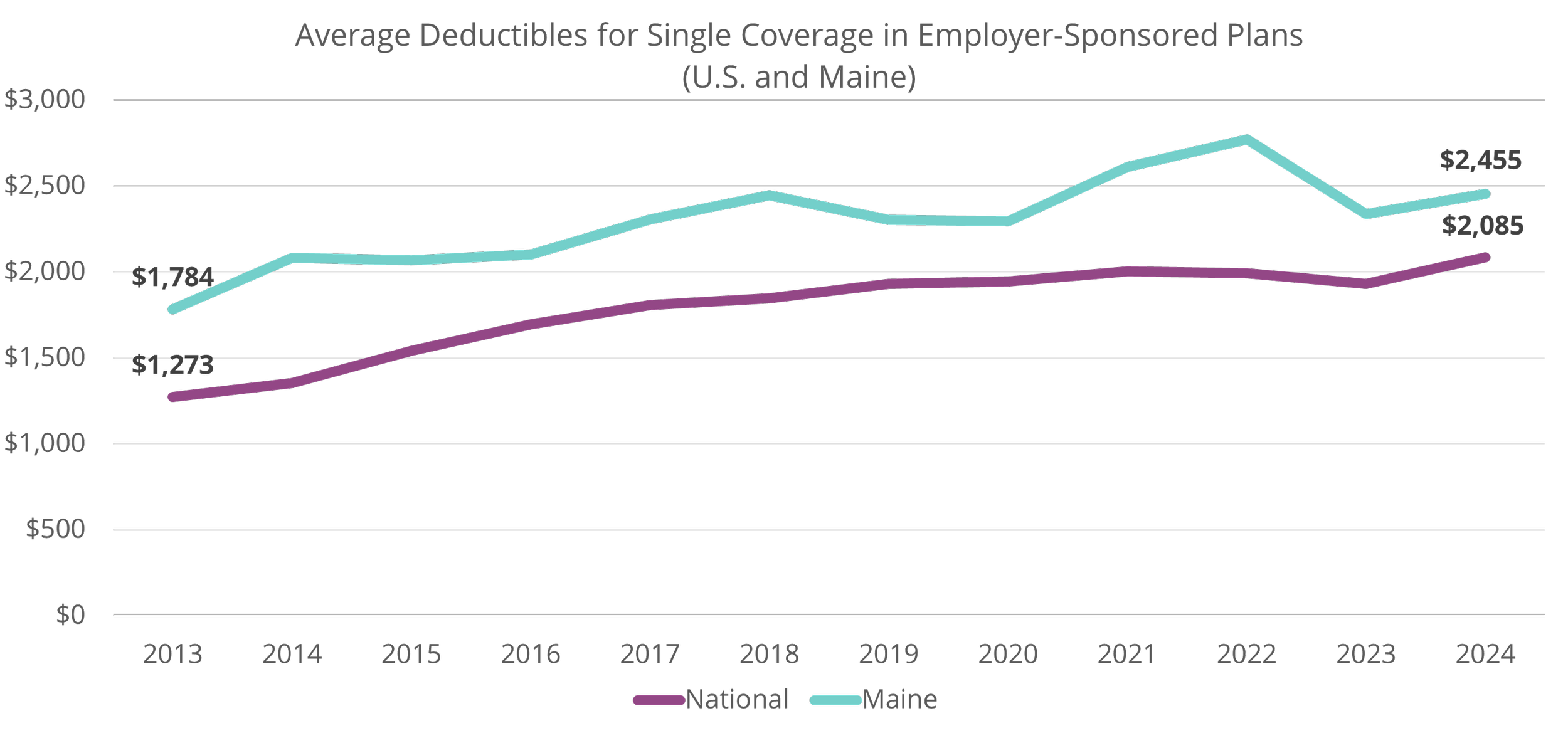
“Average Annual Deductible per Enrolled Employee in Employer-Based Health Insurance for Single and Family Coverage 2013-2024.” KFF, https://www.kff.org/other/state-indicator/average-annual-deductible-per-enrolled-employee-in-employer-based-health-insurance-for-single-and-family-coverage/.
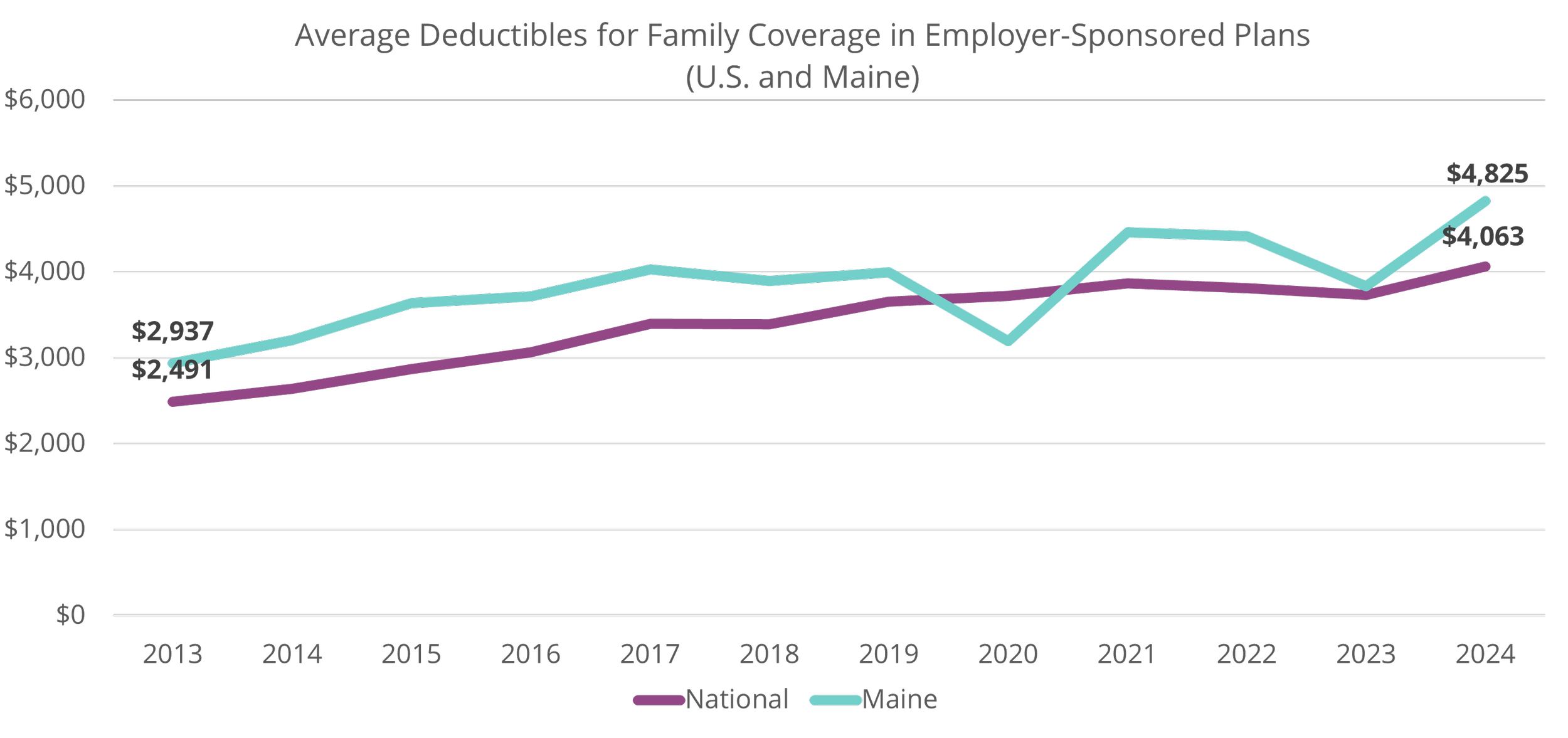
“Average Annual Deductible per Enrolled Employee in Employer-Based Health Insurance for Single and Family Coverage 2013-2024.” KFF, https://www.kff.org/other/state-indicator/average-annual-deductible-per-enrolled-employee-in-employer-based-health-insurance-for-single-and-family-coverage/.
Who pays for health care?
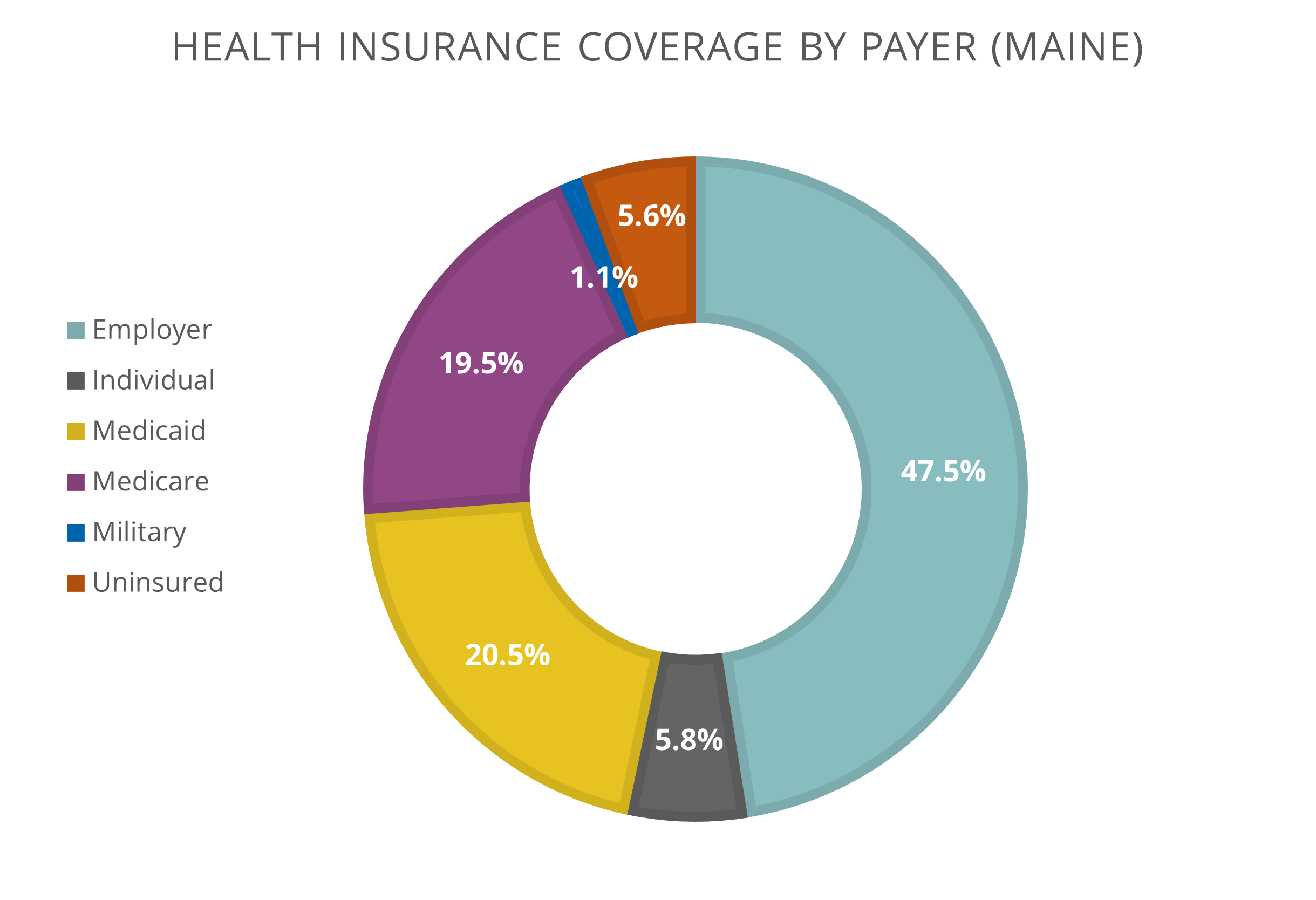
Nearly half of Maine’s population is insured through employer-sponsored health plans, including plans provided by private businesses, as well as plans provided to municipal, public education, and state employees. As healthcare costs continue to rise, those additional expenses fall on Maine employers, their employees and families, and taxpayers whose dollars support public sector workers.
Rising costs are not being borne by insurance carriers. Many Maine employers, for example, are self-insured, meaning they pay their plan members’ healthcare costs directly—their insurance carrier merely processes their claims. So, when costs rise, those costs must somehow be absorbed by the employer and their employees.
And while carriers are responsible for covering the healthcare costs of fully insured plans, when healthcare costs go up, carriers increase the premiums they charge to make sure that they have sufficient funds to cover a plan’s cost. At the end of the day, higher healthcare costs are paid by employers, employees, and taxpayers—not by insurance carriers.
Premiums in the U.S.
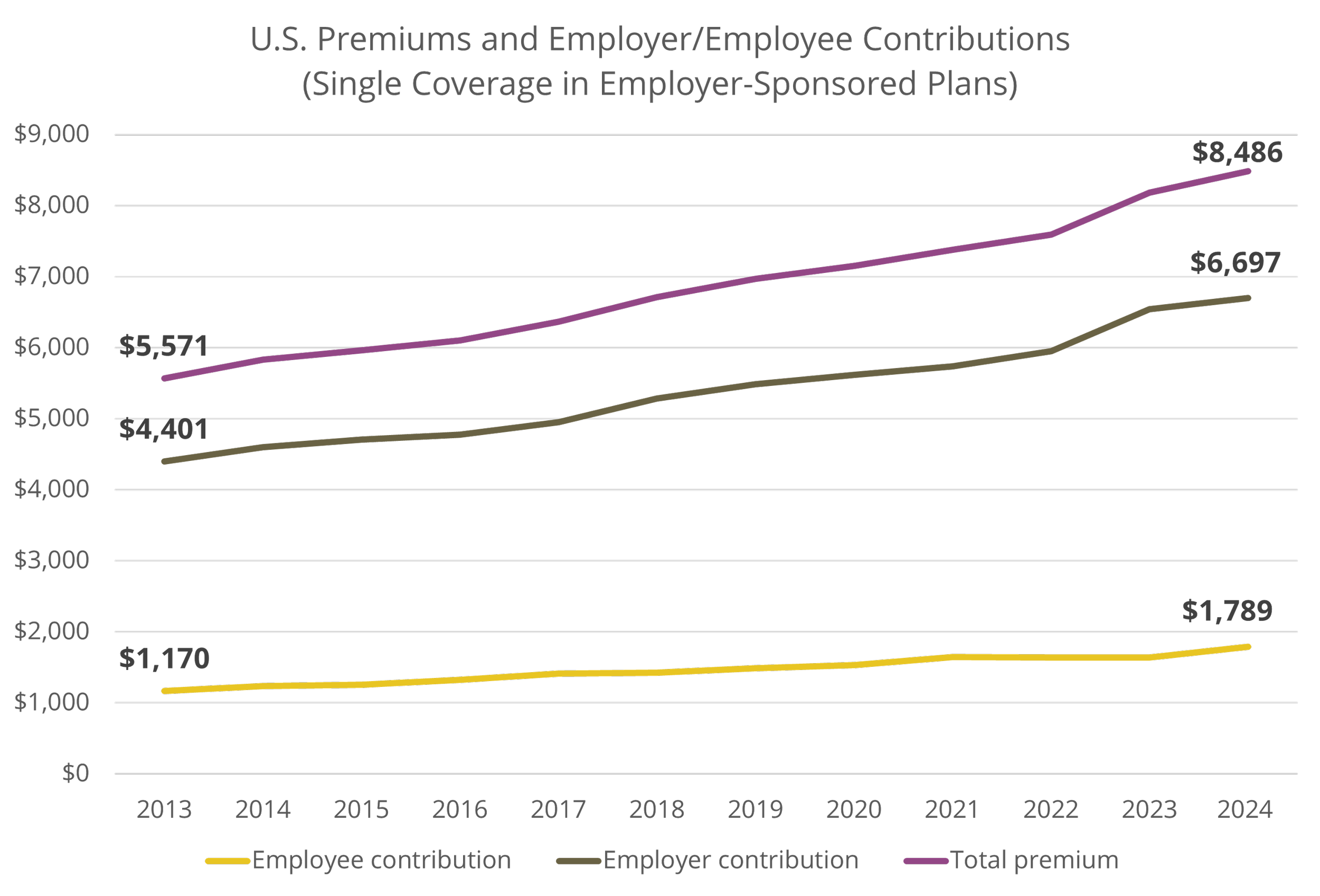
National premiums for employer-sponsored plans grew 52% between 2013 and 2024, with average contributions from both employers and employees increasing. Employers absorbed more of the increase, with their average contributions rising 52%, while employee contributions rose by 53%.
Premiums in Maine
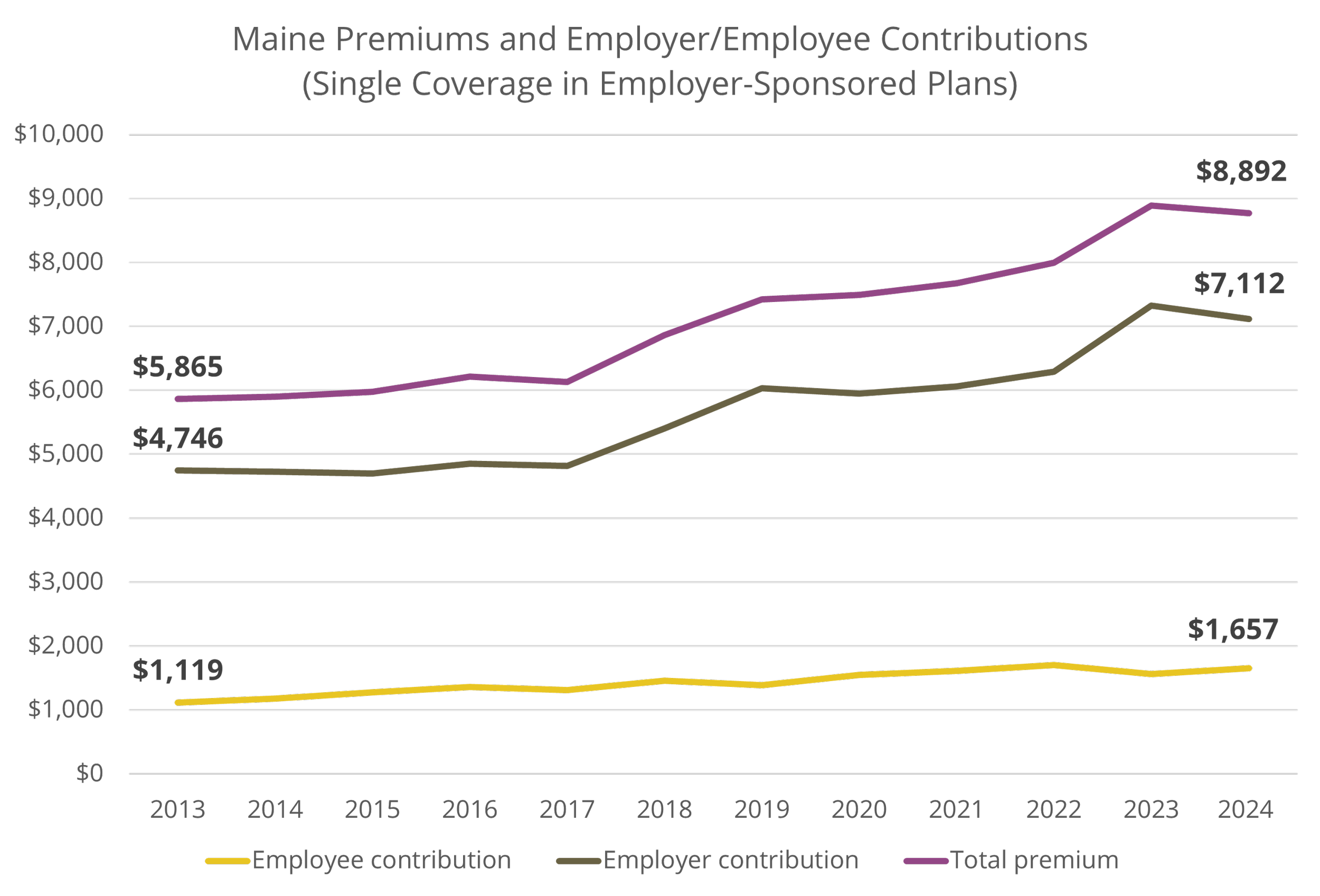
Consistent with national trends, premiums in Maine have increased substantially since 2013, with employers absorbing more of that increase than employees. Premiums for employer-sponsored plans rose 52% between 2013 and 2024, with employer contributions increasing by 50% and employee contributions by 48%--also consistent with national trends. Maine employees have the 12th lowest premium contribution (as a percent of total premium) nationwide, paying 18% of total premium, down slightly from 19% in 2013.
Deductibles Across the U.S.
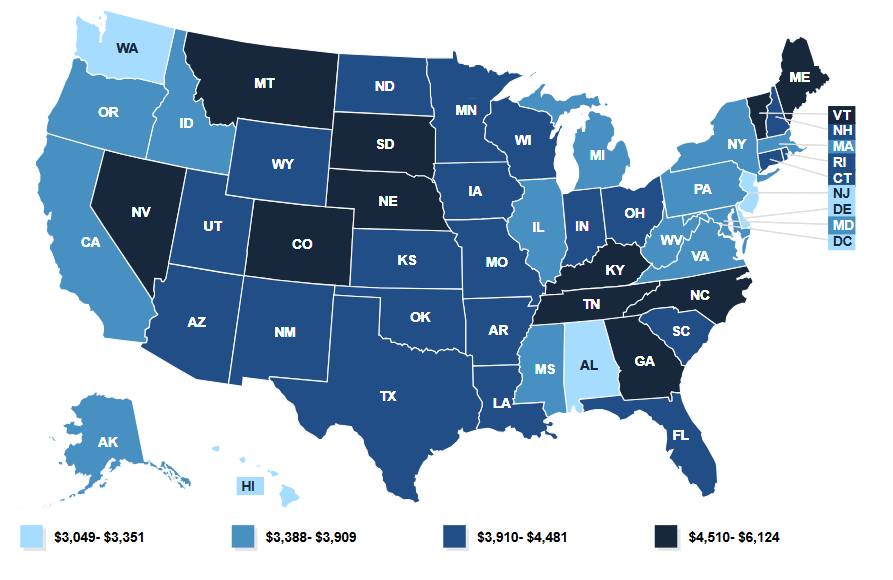
Maine’s average deductible for family coverage in employer-based plans is the 4th highest in the nation. Maine’s per capita personal income, by contrast, is ranked 27th.
Average Deductibles in Maine for Single Coverage
Nationwide, the average deductible for single coverage in employer-sponsored plans has increased by 63% since 2013. Maine’s average deductible rose 37% over that period, but at $2,455, it is 17% above the national average and 6th highest nationwide.
Average Deductibles in Maine for Family Coverage
Nationwide, the average deductible for family coverage in employer-sponsored plans has increased by 63% since 2013. Maine’s average deductible rose 64% over that period and in 2024 is the 4th highest average family deductible.