MAINE HEALTHCARE SECTOR
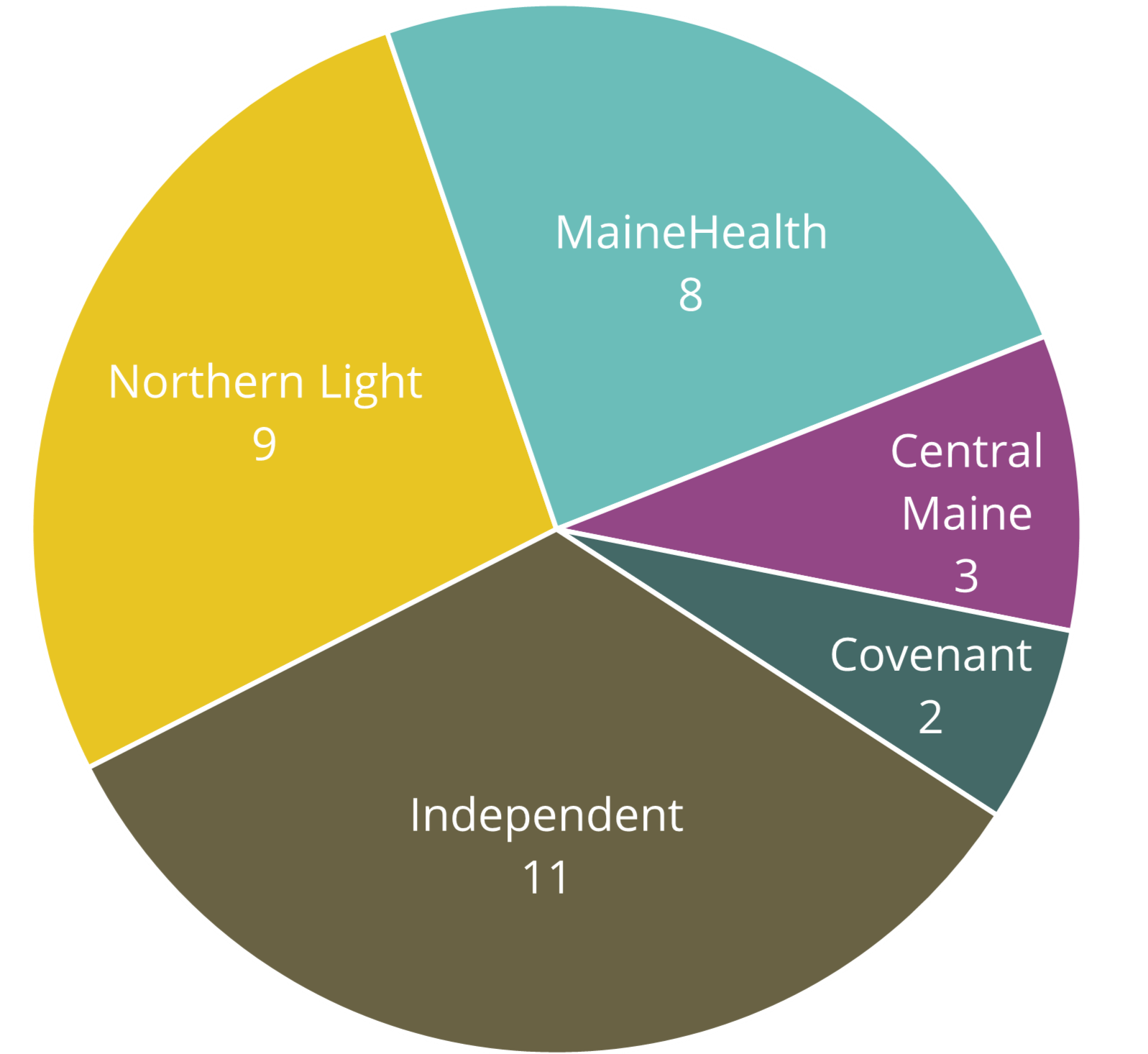
Maine’s healthcare market is highly consolidated, with more than half of the state’s hospitals owned by two health systems. This gives “must have” providers near monopolistic power when it comes to contract negotiations, allowing dominant healthcare systems to negotiate substantial rate increases from carriers, who need to have those systems in their networks to meet network adequacy requirements and ensure patient access to services.
SOURCE: “Evolution of U.S. Hospital Markets.” Health Care Affordability Lab at Yale, https://markets.healthcareaffordabilitylab.org/introduction.
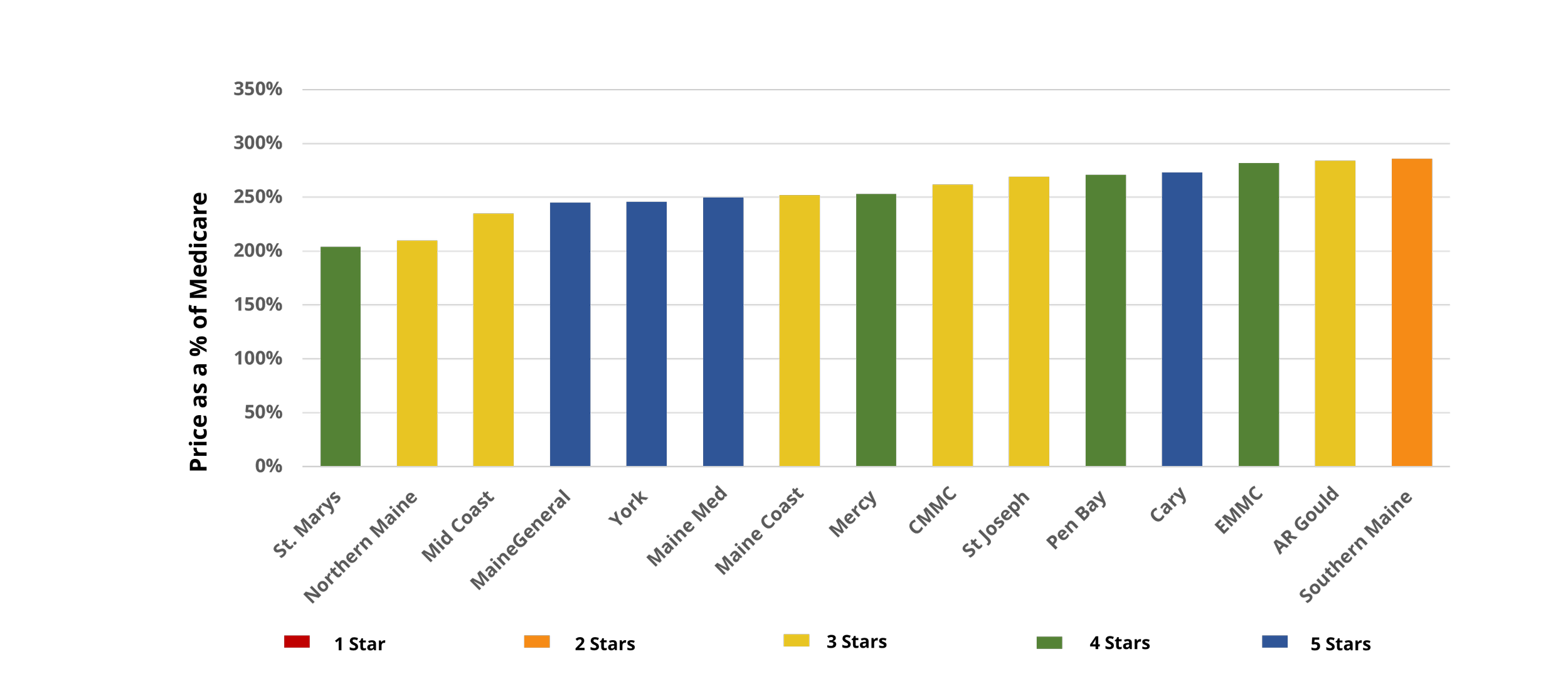
Notes: Prices are a percent of Medicare (2020-2022). Quality ratings based on 1/24 CMS Star Ratings. Prices are calculated based on allowed amounts paid by private employer-sponsored health plans.
SOURCES: Whaley, Christopher M., et al. Prices Paid to Hospitals by Private Health Plans: Findings from Round 5.1 of an Employer-Led Transparency Initiative. RAND Corporation, 10 Dec. 2024. www.rand.org, https://www.rand.org/pubs/research_reports/RRA1144-2-v2.html.
“Hospitals Archived Data Snapshots.” Centers for Medicare & Medicaid Services, https://data.cms.gov/provider-data/archived-data/hospitals.
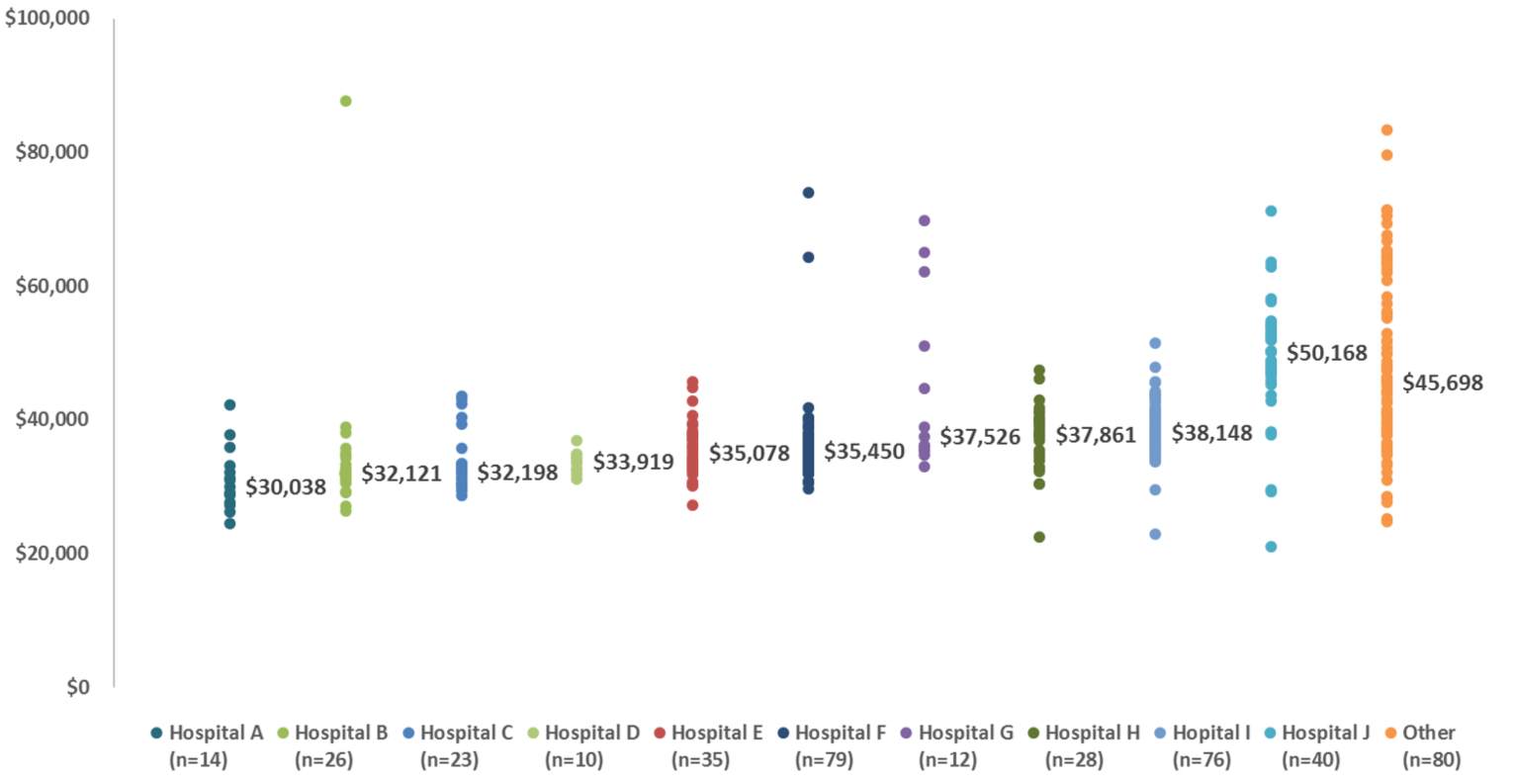
Cost of Knee Replacement at Maine Hospitals
Notes: 2015-2016 episodes. Bundle defined by Symmetry ETG grouper, excludes bilateral surgeries and outliers ($20,000 - $100,000). Episodes defined by Symmetry ETG with outliers ($20,000 - $100,000) and bilateral episodes removed. All cost attributed to hospitals.
SOURCE: HPA Book of Business
SOURCE: Based on Jul’21 – Jun’22 HPA Book of Business data
Hospital Ownership in Maine
Maine has a highly consolidated healthcare market, with more than half of the state’s 33 hospitals owned by two health systems. For one large statewide HPA member, 74 percent of their hospital spend is concentrated in those two systems.
Maine’s system is also vertically consolidated, with approximately 80 percent of primary care providers and 50 percent of specialists employed by a hospital.* While hospitals contend that primary care practices operate at a deficit, a national survey of hospital CFOs found that hospital-employed PCPs generate over $2 million in average net revenue annually for their affiliated hospitals.
*Based on information provided by an insurance carrier operating statewide in Maine.
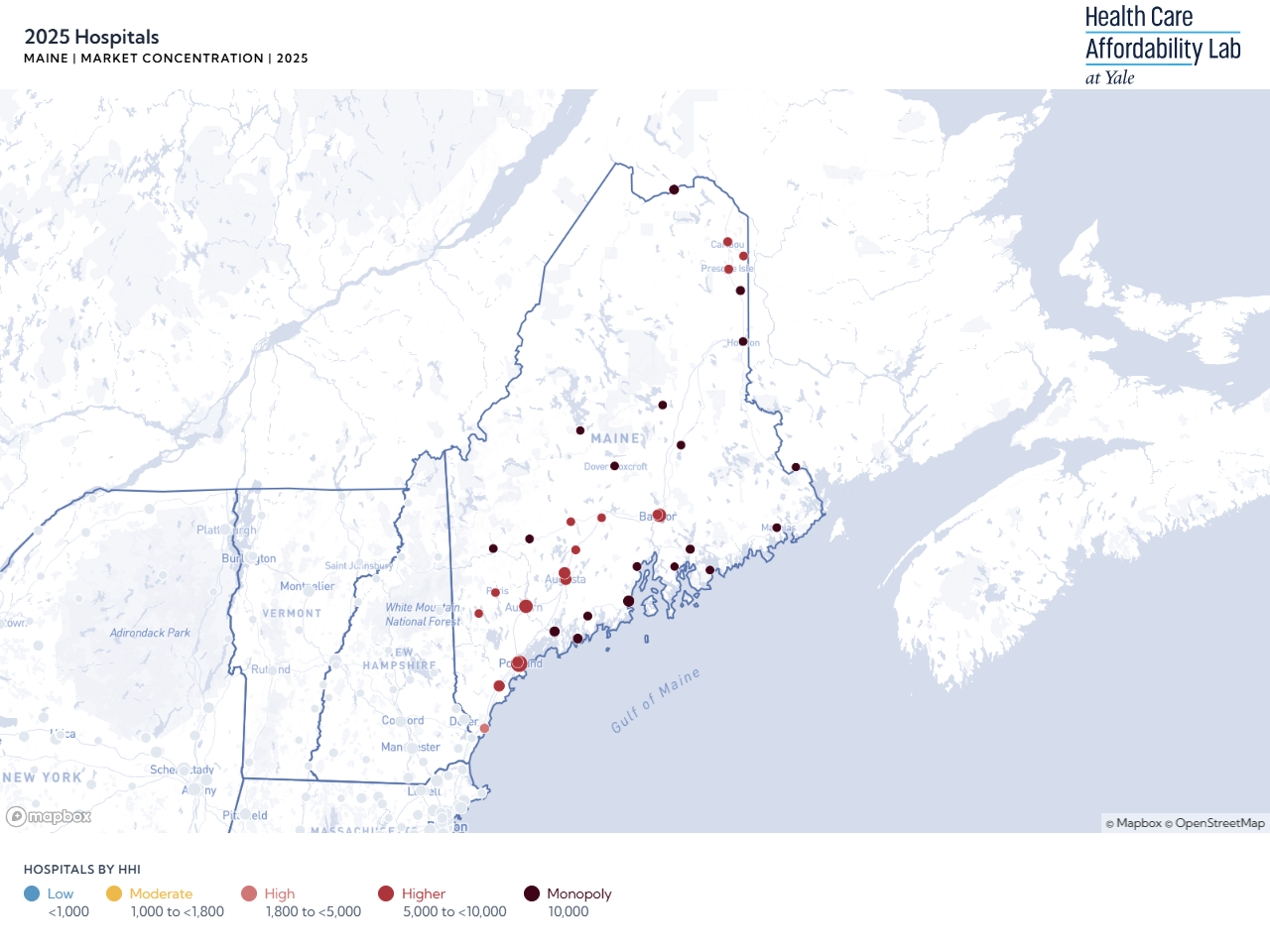
Hospital Concentration in Maine
Data from Yale’s Health Care Affordability Lab shows the market concentration of Maine’s hospital systems with the average Herfindahl–Hirschman Index (HHI) of 8,225. Nineteen of Maine’s hospitals have an HHI over 10,000 and are considered monopolies.
Quality and Price Analysis
In most other markets, higher prices means higher quality. But that is not the case for health care, where higher prices do not guarantee higher quality. Among Maine’s non-critical access hospitals, quality does not appear to be correlated with price, as shown in the chart. This is consistent with national studies, including research that found price and quality are negatively correlated. In other words, higher quality care is generally associated with lower prices, not higher prices.
Price Variation in Maine Hospitals
Prices for the same procedure can vary substantially depending on where a patient receives care and higher prices do not mean better quality. Even in the same facility, prices vary depending on insurance carrier and plan type. New federal regulations require hospitals to publish prices for many procedures, allowing patients to find the most affordable option for their plan, but many hospitals nationwide, including some in Maine are non-compliant with the new rule, and these files can be very difficult for consumers to navigate.
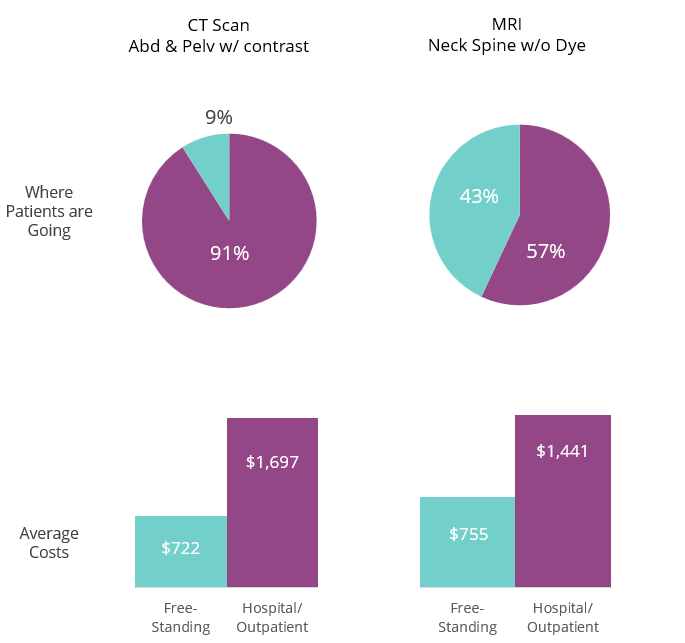
Hospitals Charge More Than Other Providers for the Same Service
Prices for the same procedure can vary substantially depending on where a patient receives care. Independent or free-standing infusion centers and imaging centers often have lower prices. Hospital outpatient settings for these services often have the highest prices. The chart compares prices for common imaging services at hospitals and free-standing facilities in Maine.