Market Consolidation
Maine’s healthcare market is highly consolidated, with more than half of the state’s hospitals owned by two health systems. This gives “must have” providers near monopolistic power when it comes to contract negotiations, allowing dominant healthcare systems to negotiate substantial rate increases from carriers, who need to have those systems in their networks to meet network adequacy requirements and ensure patient access to services.
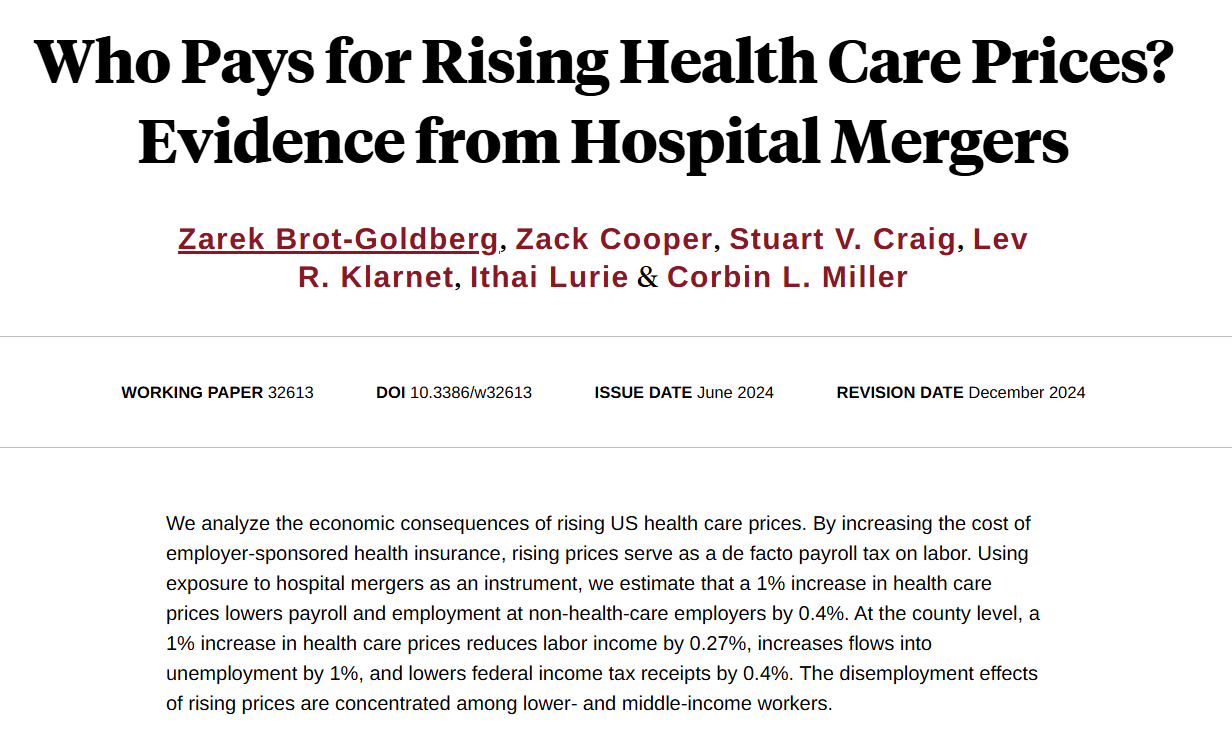
Studies have found that prices in consolidated markets are higher than in competitive markets, with one study estimating average prices are 12 percent higher at monopoly hospitals, compared to markets with robust competition.
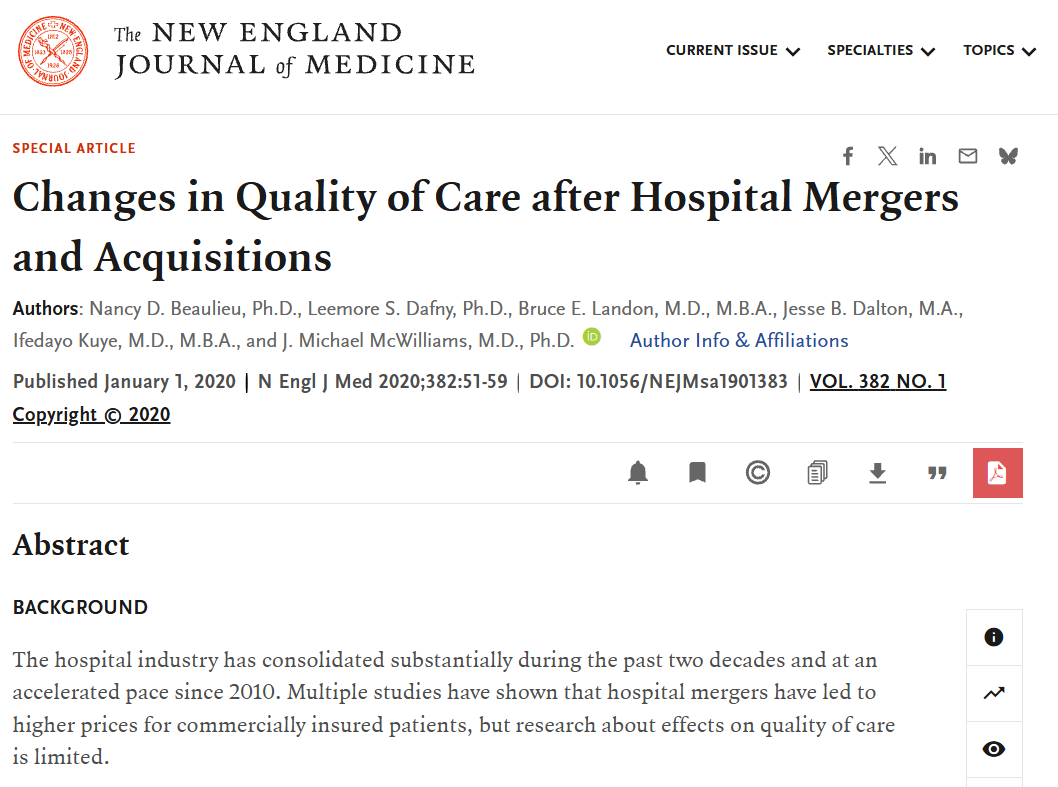
Hospitals assert that mergers yield improved care coordination and quality, but research on the impact of mergers disputes this claim. One study found that hospital acquisitions were “associated with modestly worse patient experiences and no significant changes in readmission or mortality rates.”
Maine’s healthcare market is also vertically integrated, with 80 percent of Maine’s primary care providers and 50 percent of the state’s specialists employed by a hospital.*
While hospitals often claim they buy primary care practices to save those practices from closing their doors, a national survey of hospital CFOs and other financial managers found that each hospital-employed PCP generates over $2 million in average net revenue annually for their affiliated hospitals.
System purchases of physician practices also decrease affordability, with a recent literature review concluding that such vertical consolidation results in higher prices, which can lead to higher premiums.
Maine’s consolidated market also gives “must have” providers near monopolistic power when it comes to contract negotiations, allowing dominant systems to insist on contract provisions with carriers and employers that can further limit competition, including:
All-or-nothing clauses that require carriers to include all of a system’s providers in their network, or none of them, even when some of those providers may cost more or have poorer quality and outcomes than other providers in a region. Anti-steering clauses prohibit carriers from offering lower patient cost sharing to incentivize them to use non-system providers who offer higher value services.
These provisions ultimately hurt Maine families. Because many common services cost significantly more in a hospital or outpatient setting than in stand-alone or office settings, consumers would benefit from policies that help them identify—and encourage them to use—more affordable sites of care. But this sort of help is off limits if their carrier was forced to include anti-steering provisions in their contracts.
Additional oversight of healthcare mergers and acquisitions in Maine’s healthcare market would guard against the price increases that research finds often accompany such mergers. Where markets are already consolidated, prohibiting anti-competitive practices and out-of-control rate increases would limit the ability of monopolistic providers to leverage their substantial market clout.
*Based on information provided by an insurance carrier operating statewide in Maine.



“I’d say that in Maine, we are very unique. We have concentration of providers. We have MaineHealth, we have Northern Light, Central Maine. The two behemoths are MaineHealth and Northern Light. They’re the hospitals, they own the provider practices, specialists. It’s all a business as well. They have to refer within.” -Portland, ME Business Owner