Coverage Mandates
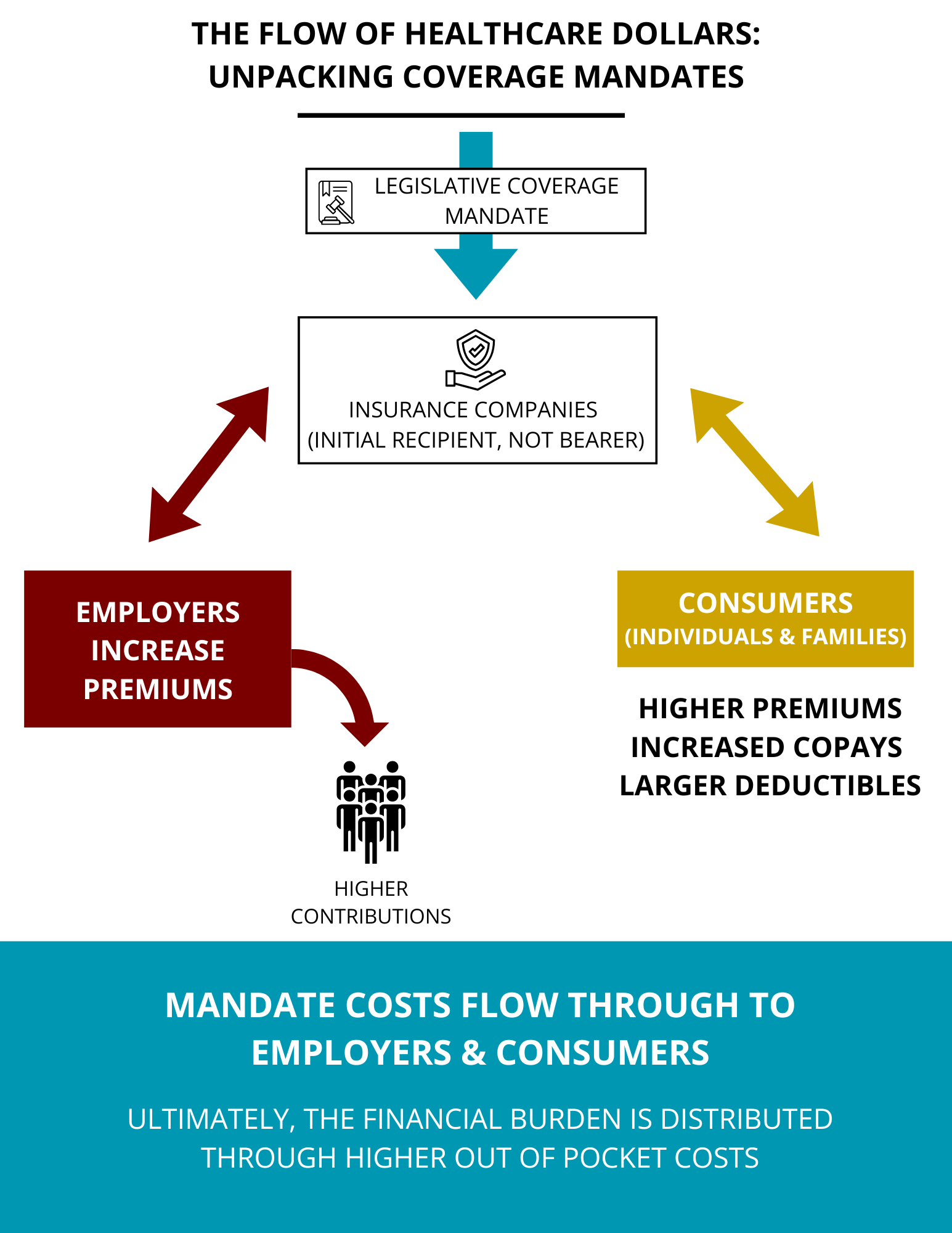
The Maine Legislature frequently considers legislation that would mandate insurance coverage of specific services. While beneficial for those individuals who utilize those covered services, such coverage mandates increase costs for everyone else, including Maine employers and their employees and families.
That’s because the costs of coverage mandates are not paid by insurance carriers. Instead, the full costs of such coverage expansions are passed onto employers and employees in the form of higher premiums, deductibles, and copays.
Maine businesses and families are already struggling to afford the cost of health care; mandating coverage of new services only exacerbates the affordability crisis at a time when healthcare premiums are already expected to continue growing significantly faster than inflation. Maine currently ranks 4th highest in the nation for average family deductible, and only the 27th highest in per capita income. We must prioritize policies that ease this affordability crisis, not worsen it.
Likewise, policies that lower or prohibit patient cost sharing for certain services also increase costs for employers, employees, and their families. That’s because limiting the out-of-pocket costs that some individuals pay for a service doesn’t eliminate the cost of that service. Providers still need to get paid, and the portion of the fee that the patient no longer pays gets shifted back onto the employer and all the other plan members, who see their costs rise through higher premiums, deductibles, or cost-sharing on other services. Eliminating cost sharing does not reduce costs, it simply shifts those costs onto others.
To the extent the Legislature considers mandating coverage of services, we believe those services must be evidence-based and balanced against their costs to Maine families and employers, who are already struggling to afford the cost of care.
“In our case, [healthcare benefits] is our third highest overhead expense. Payroll, rent, and then insurance. On the long list of overheads, it’s the top of the list.” -Portland, ME Business Owner
“We have five employees at [company]. I’m the only full-time employee, and it’s sad to say, but I’m going to be 100% transparent and honest. We structure our employee hours based on the fact that we can’t afford to offer health insurance.” -Maine Nonprofit Leader